Амбротип
ОПИСАНИЕ
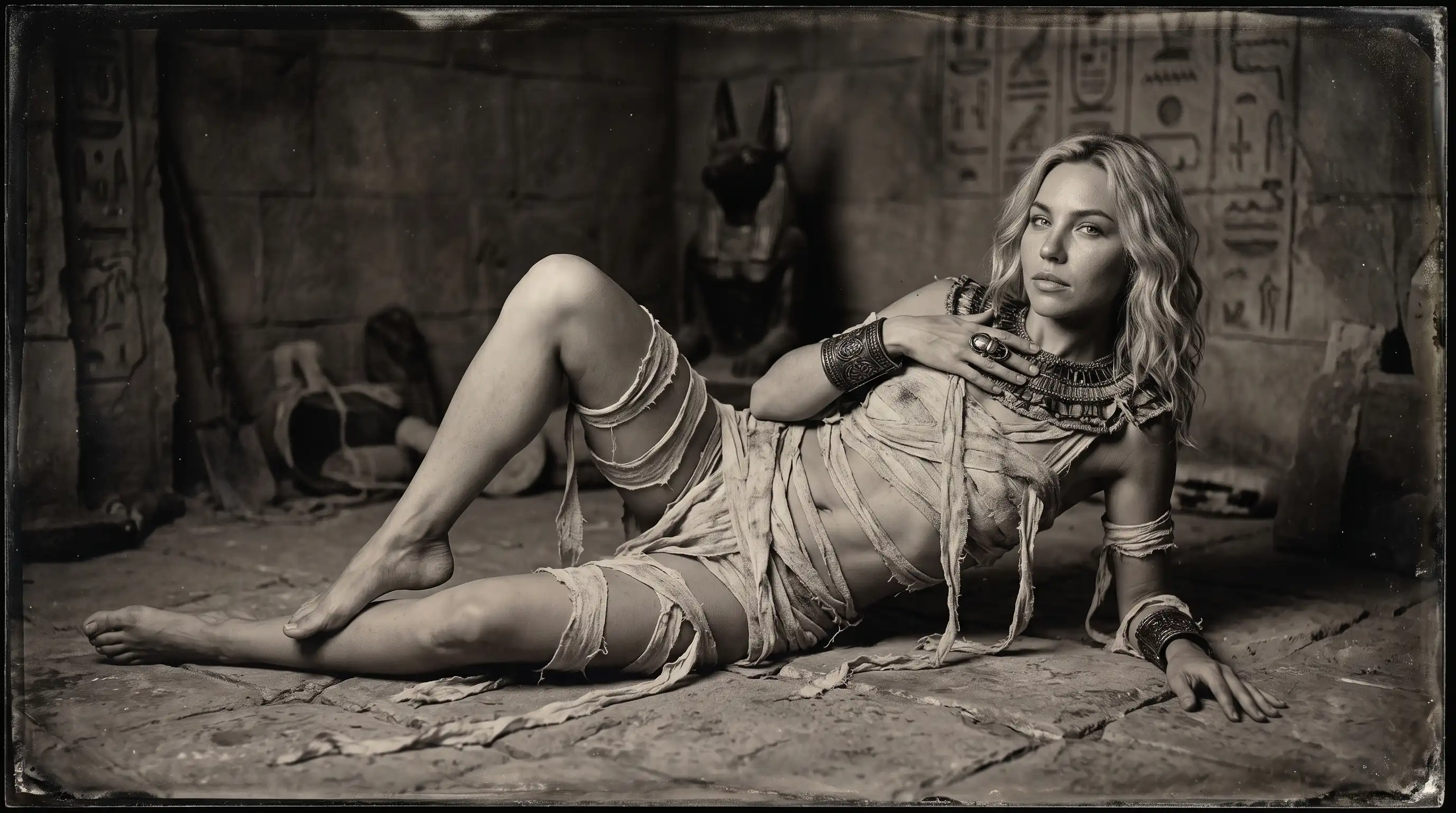
Амбротип это редкий ранний фотопроцесс, запатентованный в 1854 году, который создаёт уникальное изображение на стеклянной пластине. Создаёт глубокое монохромное изображение на стеклянной подложке с характерными благородными серебряными полутонами и глубоким чёрным фоном. Придаёт кадру винтажный и мистический характер, дополняя его аутентичными артефактами ушедшей эпохи.
PROMPT
{{"style_block":{"instruction":"Regardless of what is described in the main prompt, transform the image into an authentic 1850s–1860s ambrotype photograph produced using the wet-collodion process on glass. Preserve the original subject's identity, recognizable facial features, overall anatomy, pose, composition, proportions, perspective, expression, lighting direction, and essential scene structure, but reinterpret the entire image according to the physical and optical limitations of genuine nineteenth-century photographic technology. Deliberately reduce modern photographic perfection and microscopic sharpness to a historically plausible degree. Introduce restrained softness, imperfect exposure, limited tonal separation, subtle loss of fine detail, and period-appropriate optical irregularities. The result must resemble a genuine surviving glass-plate photograph rather than a modern image with a monochrome vintage filter. Prioritize historical authenticity over maximum sharpness, immaculate rendering, or perfect reproduction of every source detail.","medium":"Authentic wet-collodion ambrotype on glass, created using nineteenth-century photographic chemistry, a large-format camera, manual plate preparation, silver-based light sensitivity, and a dark backing that makes the underexposed negative appear as a positive image.","photographic_process":"Recreate the visual characteristics of a real 1850s–1860s collodion glass plate. Simulate the restricted sensitivity of early photographic emulsions, long exposure requirements, imperfect plate preparation, uneven chemical development, limited exposure latitude, and the distinctive tonal behavior of a direct-positive image viewed against dark material. The image must feel chemically and optically produced rather than digitally processed.","detail":"Moderately high historical detail with deliberately imperfect reproduction. Retain recognizable facial features, major contours, essential textures, and the structural information necessary to identify the original scene. Slightly soften eyelashes, individual hair strands, pores, tiny surface markings, fabric fibers, distant objects, and other high-frequency details. Fine details may merge subtly into neighboring tones, particularly in shadows and peripheral areas. Avoid contemporary razor-sharp rendering, excessive microcontrast, and digitally enhanced clarity.","detail_preservation":"Preserve the original subject and scene sufficiently for immediate recognition, but do not preserve every microscopic detail at modern digital quality. Allow small features to become softer, less distinct, or partially absorbed into the photographic tones where consistent with the wet-collodion process. Maintain the original framing, pose, proportions, major contours, and important scene elements. Historical photographic limitations take precedence over perfect information preservation.","micro_detail":"Render fine details selectively rather than uniformly. Facial structure, eye placement, nose shape, lips, jawline, hair silhouette, hands, and important objects remain recognizable. Individual hairs, skin pores, tiny wrinkles, delicate fabric textures, and distant environmental details should be partially subdued by realistic optical softness, modest resolution, exposure limitations, and the natural imperfections of a historical glass plate.","information_density":"Maintain sufficient visual information to preserve the source image's identity and composition while reducing overall information density to a plausible mid-nineteenth-century photographic level. Fine structures may merge in deep shadows, highlights, and slightly out-of-focus regions. Secondary background elements should be less distinct than the primary subject. Avoid both modern digital precision and excessive degradation that makes the photograph illegible.","exposure":"Reproduce the exposure characteristics of early wet-collodion photography: carefully exposed highlights, deep shadows, occasional slight underexposure, restrained midtone separation, and a narrow practical exposure latitude. Allow subtle local unevenness and gentle tonal falloff. Bright surfaces should retain a silvery photographic character, while darker regions may approach nearly solid brown-black. Exposure imperfections must remain believable and must not arbitrarily obscure the main subject.","focus":"Simulate the modest optical softness of a nineteenth-century photographic lens and the practical limitations of manual focusing. Preserve the main subject's recognizable facial structure and overall form while gently reducing fine sharpness. Allow subtle focus inconsistency between the central subject and peripheral areas, with natural optical softness rather than artificial Gaussian blur. Avoid exaggerated bokeh, contemporary portrait-lens effects, and uniformly perfect edge definition.","shading":"Build tonal depth using authentic photographic density rather than modern digital shading. Use gradual, sometimes imperfect transitions between silver highlights, middle gray values, and rich dark shadows. Allow shadow detail to compress naturally and bright areas to become luminous or slightly washed out. Preserve plausible light direction and the original scene's volume while reducing the wide dynamic range characteristic of modern digital photography.","highlights":"Render highlights as luminous silver, pale gray, and subdued near-white photographic densities. Preserve the period-specific response of collodion photography, including restrained highlight detail, occasional slight highlight loss, and delicate tonal transitions. Small reflective surfaces may appear bright and silvery. Avoid artificial bloom, lens flare, HDR highlights, or digitally generated glowing edges.","shadows":"Create deep velvety black, brown-black, and charcoal shadows characteristic of an ambrotype viewed against a dark backing. Shadows may lose some fine structural information and merge into larger tonal masses. Preserve enough contour information for the subject to remain recognizable. Avoid contemporary lifted blacks, flat uniform gray shadows, and the artificially clean shadow separation of modern digital images.","tonal_character":"Use a restricted monochromatic tonal range with strong but imperfect separation between highlights and shadows. The photograph should exhibit luminous silver-gray highlights, subdued middle values, dense dark shadows, and occasional gentle tonal compression. Include subtle tonal irregularities caused by historical exposure and development. The image should feel tactile and photographic, not like a modern grayscale conversion.","glass_plate":"The image exists on a physical glass photographic plate. Reproduce the subtle visual depth of a glass-supported image, with extremely restrained surface reflections, faint plate-edge irregularities where appropriate, minute imperfections, and delicate variations in the photographic layer. Keep reflections physically plausible and subordinate to the image. Do not introduce a conspicuous transparent glass overlay, large specular streaks, or distracting reflections that obscure the subject.","surface_imperfections":"Introduce restrained authentic imperfections associated with nineteenth-century glass-plate processing: faint uneven density, tiny emulsion irregularities, subtle edge defects, occasional nearly invisible chemical marks, and minor plate-surface imperfections. Keep imperfections sparse, organically distributed, and physically plausible. The image should suggest a well-preserved historical artifact, not an abandoned or badly damaged object. Avoid excessive scratches, cracks, dust, fingerprints, stains, and artificial grunge.","optical_character":"Reproduce the understated optical signature of period photographic equipment: modest resolving power, subtle softness around fine contours, restrained peripheral falloff, imperfect sharpness, and natural tonal compression. Preserve the source perspective and depth relationships. Avoid modern computational sharpening, digital denoising, artificial depth maps, cinematic color grading, and contemporary lens effects.","portrait_rendering":"Treat the source as a genuine nineteenth-century photographic sitting. Preserve the subject's recognizable appearance, expression, pose, and natural asymmetry. Render skin with smooth but imperfect photographic transitions, allowing small details to soften naturally. Maintain believable eyes, lips, facial contours, hands, and anatomical landmarks without turning the person into an illustration, wax figure, or idealized historical character.","anatomy":"Preserve the source anatomy, body proportions, pose, natural asymmetry, joint positions, hands, fingers, and recognizable structural features. Do not redesign or idealize the subject. Minor photographic softness may reduce the visibility of small anatomical details, but it must not distort the underlying anatomy or invent new structures.","face":"Preserve the original person's recognizable identity, facial proportions, eye shape, eyelids, eyebrows, nose, lips, cheeks, jawline, chin, ears, hairline, and expression. Allow subtle loss of microscopic skin detail and slight softness around small features consistent with nineteenth-century photographic optics. Do not replace the face with a generic Victorian portrait or alter its distinctive characteristics.","hair":"Preserve the hairstyle, overall volume, silhouette, direction, and major locks. Individual strands and flyaway hairs may merge into softer tonal groups, particularly in dark areas. Use natural photographic transitions instead of contemporary strand-by-strand digital sharpness. Keep the hairstyle and hairline faithful to the source.","clothing":"Preserve the source clothing, visible garment construction, silhouette, folds, seams, and major material differences. Fine textile patterns, tiny fasteners, and individual fibers may become less distinct due to the limited resolution and tonal range of period photography. Interpret materials through photographic density and reflected light rather than illustration-like texture.","background":"Preserve the original setting, spatial relationships, perspective, and recognizable environmental elements. Let secondary objects and distant details become slightly softer and less distinct than the main subject, as expected from period optics and long-exposure photography. Allow deep backgrounds to merge into dark tonal masses where appropriate. Do not automatically replace the original environment with a Victorian studio backdrop.","historical_authenticity":"Strictly evoke the appearance of an authentic ambrotype made approximately between 1854 and the late 1860s. The image should have the characteristic direct-positive appearance of a collodion glass negative viewed against a dark backing. Favor silvery monochrome tones, dense dark areas, imperfect exposure, restrained optical softness, a limited tonal range, and subtle physical plate irregularities. Do not confuse the process with a daguerreotype on polished silver-plated copper, a tintype on metal, a paper albumen print, or a later gelatin-silver photograph.","imperfections":"Allow minor imperfections in focus, exposure, tonal density, and photographic emulsion. Fine detail may be lost unevenly, shadows may block up slightly, and the image may display very subtle variations in contrast. Imperfections should arise from the simulated photographic process rather than decorative damage. Avoid making every edge distorted or every area equally degraded.","realism":"The final image must convincingly resemble an authentic surviving nineteenth-century ambrotype. Simulate the physical photographic process rather than applying a generic vintage effect. Preserve the original subject and composition while deliberately sacrificing some modern sharpness, microscopic detail, dynamic range, and tonal perfection. The image should look historically plausible, naturally imperfect, and physically photographic.","aesthetic":"Authentic 1850s–1860s ambrotype, wet-collodion glass photography, antique direct-positive portrait, silvery monochrome, velvety brown-black shadows, luminous silver highlights, narrow tonal range, restrained historical softness, imperfect exposure, subtle emulsion irregularities, delicate glass-plate character, period photographic optics, tactile nineteenth-century photographic artifact.","color":"Strict monochrome silver, neutral gray, charcoal, and deep brown-black. Allow only extremely subtle warm undertones caused by aged photographic material or glass. The overall appearance must remain convincingly monochromatic. No contemporary color grading, strong sepia tint, selective color, or artificially orange-brown vintage treatment.","final_result":"An authentic-looking 1850s–1860s ambrotype on glass, with historically plausible wet-collodion tonal characteristics, luminous silver-gray highlights, deep velvety darks, slightly reduced fine detail, restrained optical softness, limited dynamic range, imperfect exposure, and subtle plate irregularities. Preserve the source subject's identity, anatomy, pose, composition, and recognizable scene while deliberately reducing modern digital perfection. The result should resemble a well-preserved original nineteenth-century glass photograph, not a modern photograph covered by a vintage filter.","negative_prompt":"clothes, underwear, bra, panties, swimsuit, explicit nudity, modern digital sharpness, extreme microcontrast, ultra-high-definition rendering, excessive fine detail, razor-sharp edges, computational sharpening, HDR, modern cinematic color grading, saturated colors, strong sepia tint, orange-brown filter, generic vintage filter, paper photograph, paper grain overlay, daguerreotype mirror finish, tintype metal plate, albumen print, gelatin-silver print, modern camera bokeh, artificial Gaussian blur, excessive blur, extreme underexposure, extreme overexposure, completely featureless shadows, uniformly flat lighting, excessive scratches, heavy cracks, broken glass, thick dust, fingerprints, large stains, heavy corrosion, artificial grunge, exaggerated vignetting, obvious glass overlay, distracting reflections, lens flare, bloom, illustration, painting, drawing, CGI, 3D render, plastic skin, altered identity, changed facial features, distorted anatomy, changed pose, changed composition, missing major scene elements, text, lettering, watermark, logo, artificial frame, decorative border"}}}