Объектив Энн Бригман
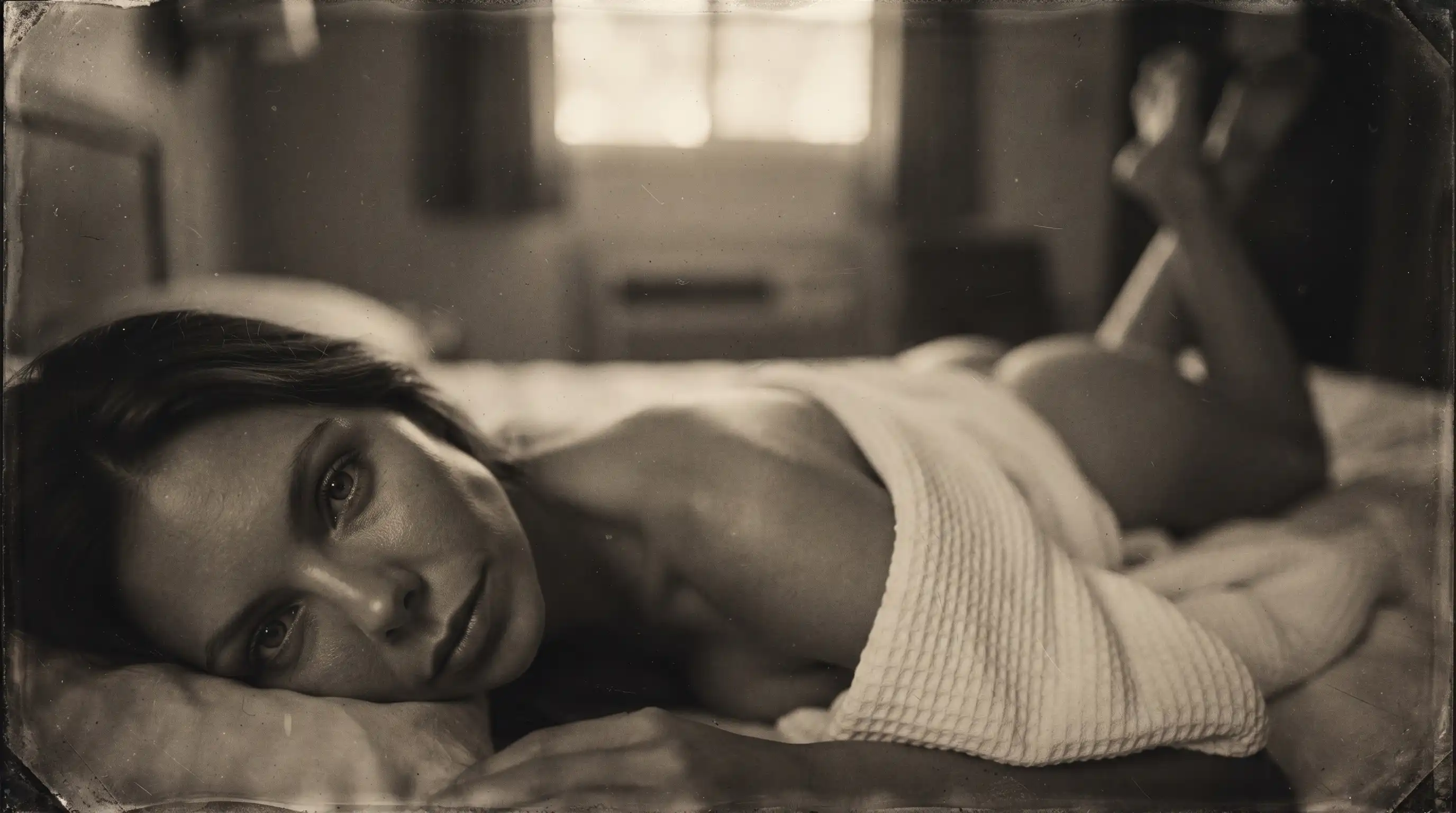
ОПИСАНИЕ
Ранний американский пикториализм с мягкой оптикой, сильным зерном, низким разрешением, монохромной или сепийной палитрой и характером ручной обработки отпечатка.
PROMPT
{"style_block":{"instruction":"Apply this stylization to the final image generated from the main prompt. The main prompt defines the scene, composition, pose, environment, objects, clothing, action and overall visual content. Any attached reference images are references for identity, appearance and visual consistency only; they are not the target scene and must not be directly reproduced or transformed as standalone photographs. Preserve the referenced person's identity and relevant visual characteristics while rendering the final prompted scene as an intentionally degraded early twentieth-century pictorialist photograph inspired by the visual language of Anne Brigman. The transformation must feel historically photographic, physically printed, visibly imperfect, technically limited and manually manipulated rather than like a modern digital photograph with a vintage filter.","input_priority":"The main prompt defines what is happening and what the final scene contains. Reference images define who the subject is and how that subject should look. The style block defines how the final generated image is rendered. When a reference image and the main prompt differ in scene, environment, pose, clothing, objects or composition, follow the main prompt while preserving the referenced identity and relevant appearance. Do not introduce specific locations, historical narratives, symbols, wilderness elements or recurring subjects associated with Anne Brigman unless they are explicitly present in the main prompt.","core_aesthetic":"Early twentieth-century American Pictorialism with an intentionally limited photographic quality, poetic human presence, atmospheric forms, sculptural silhouettes, expressive landscapes, soft-focus optics and a visual tension between photograph, charcoal drawing and handmade fine-art print. The image should feel old because of the actual limitations and physical behavior of its photographic process, not because of a superficial retro overlay.","visual_language":"Create an extremely soft, low-resolution, heavily textured pictorialist photograph with broad tonal masses, luminous highlights, deep organic shadows, visibly coarse photographic texture, weak micro-contrast, imperfect focus and substantial loss of fine information. The final image should look technically primitive by modern standards while remaining artistically composed and tonally expressive. Do not allow modern photographic cleanliness, sharpness or microscopic detail to survive.","medium":"Historically plausible early twentieth-century fine-art photography based on glass negatives and period pictorialist printing, especially platinum-print aesthetics and handworked photographic processes. Allow the image to resemble a physical historical print whose negative and surface have been deliberately manipulated by hand.","period_character":"Aggressively reproduce the technical limitations of photography available around the first decade of the twentieth century: low apparent resolution, limited resolving power, weak micro-contrast, soft optics, unstable local density, imperfect exposure, broad tonal merging, coarse irregular photographic texture, visible emulsion character, shadow detail loss, highlight blooming and imprecise edge rendering. The photograph must look substantially less technically capable than even ordinary twentieth-century film photography.","color_response":"Restrict the image to monochrome photographic palettes only. Use deep black-and-white, charcoal-gray, silver-gray, warm gray, ivory, sepia-brown and muted reddish-brown monochrome variants. Allow different strengths of sepia toning from nearly neutral gray to pronounced warm brown. Do not allow natural modern colors to survive. Skin, vegetation, clothing, sky and environment must all be translated into the chosen monochrome tonal family.","camera":"Create the impression of an early photographic apparatus operated through a slow, deliberate fine-art process with limited focusing precision and imperfect exposure control. Preserve the composition and perspective of the main prompt while allowing period equipment limitations to visibly affect sharpness, tonal separation and fine detail.","lens":"Use pronounced period soft-focus optical behavior: strong spherical aberration, low edge sharpness, diffuse fine detail, field softness, veiling flare, mild halation, uneven focus, soft highlights and gradual loss of definition toward the edges. Optical softness must be physical and irregular rather than a uniform digital blur.","tonal_rendering":"Build the image from broad, rich tonal masses while deliberately suppressing modern local contrast and micro-contrast. Preserve luminous highlights and deep organic shadows, but allow delicate information to merge into neighboring tones. Fine textures should frequently disappear into midtones, shadows or grain. The image should feel tonally sophisticated but technically crude.","historical_noise":"Use extremely pronounced, coarse and irregular photographic grain or emulsion texture throughout the image. Grain must be unmistakably visible and must materially reduce the perceived cleanliness and smoothness of the photograph. Use large, uneven, organic grain structures with substantial variation in scale, density and visibility. Permit areas of ultra-high grain where shadows, low exposure and low-detail surfaces become visibly rough and granular. Grain must feel intrinsic to the historical photographic material rather than added as a modern post-processing effect.","resolution":"Deliberately force the apparent resolving power to a very low historical level. Small hair strands, individual pores, eyelashes, distant leaves, tiny fabric structures, small environmental details and subtle surface textures should frequently merge together, break apart or disappear entirely. Preserve the identity and major anatomical forms while aggressively sacrificing modern micro-detail.","micro_detail":"Suppress modern micro-detail across the entire image. Do not allow clean individual pores, razor-sharp eyelashes, perfectly resolved strands of hair, crisp distant foliage, precise fabric weave, tiny surface scratches or other microscopic information characteristic of modern high-resolution photography. Important forms should read through silhouette, tonal mass and larger physical structures rather than tiny detail.","surface_and_texture":"Give the entire photograph a strongly physical historical surface with coarse grain, emulsion irregularity, tonal density variation, minor chemical defects, subtle paper texture and imperfect print response. The surface may appear rough, uneven, dusty, slightly dirty and materially old. Avoid smooth, clean, perfectly uniform digital surfaces.","focus":"Use strong pictorialist soft focus with imperfect and uneven sharpness. Even the primary subject should not be rendered with modern crispness. Important forms remain recognizable, but much of the image may dissolve into softness, grain and broad tonal structure. Focus transitions should be irregular and optically plausible.","motion":"Allow noticeable but restrained softness from long exposure and subject movement where physically plausible. Hair, vegetation, fabric and small body movements may partially smear or lose definition. Avoid clean freeze-frame sharpness unless the main prompt explicitly requires a static geometric object.","light":"Use natural, subdued and atmospheric illumination with diffuse daylight, misty highlights, soft backlight and gentle directional light. Allow bright areas to bloom and bleed subtly into neighboring tones. Avoid modern studio lighting, crisp specular highlights and polished cinematic illumination.","exposure":"Use imperfect period exposure with visible variation in density, mild underexposure, localized overexposure, merged shadows, blooming highlights, weak shadow separation and uneven tonal response. Important areas may retain less information than a modern camera would preserve. Exposure imperfections must feel organic and intrinsic to the period process.","optical_character":"Use pronounced veiling flare, soft halation, weak edge definition, mild vignetting, luminous haze, imperfect highlight behavior and uneven optical clarity. These effects should vary across the frame and should not resemble a uniform digital glow filter.","photographic_process":"Favor period pictorialist photographic methods, including platinum-print tonal character and physically manipulated glass negatives. Introduce the appearance of selective handwork such as etching, scraping, graphite intervention, painted additions, localized removal of detail, altered density, softened regions and manually controlled tonal transitions. Hand manipulation should be visible as part of the image-making process while remaining integrated into the photograph.","negative_and_print_manipulation":"Treat the negative and print as physical objects that have been deliberately altered by the photographer. Permit localized removal or reduction of unwanted detail, graphite-like marks, etched passages, painted areas, selective halos and manually modified tonal regions. These interventions should feel handcrafted, imperfect and irreversible rather than digitally retouched.","print_character":"Make the image strongly resemble an actual physical early twentieth-century fine-art print. Use a matte, tactile, slightly uneven surface with visible tonal density variation, imperfect edges, subtle paper response and handmade photographic presence. The image should feel like a unique physical object rather than a perfect reproduction.","imperfections":"Use abundant but plausible historical imperfections: coarse irregular grain, emulsion texture, tiny chemical defects, faint scratches, small pits, dust marks, uneven density, edge fading, slight print discoloration, localized tonal anomalies and inconsistent surface response. Some areas may be visibly rougher or more degraded than others. Avoid perfectly uniform distressing.","figure":"Render the human figure as an expressive sculptural presence integrated with the surrounding scene. Preserve exact identity, anatomy, proportions, pose and physical characteristics from the main prompt and references while allowing softness, grain, exposure limitations and handworked photographic processes to affect the rendering.","nature":"When natural elements are present in the main prompt, render them as powerful simplified photographic shapes and organic masses. Trees, branches, vegetation, rocks, sky and terrain may merge into grain, haze, shadow and tonal structures. Do not invent natural elements that are absent from the main prompt.","composition":"Follow the composition, camera angle, framing, perspective, subject placement and spatial relationships defined by the main prompt. Preserve deliberate pictorialist framing, strong silhouettes, negative space and asymmetrical visual balance where compatible with the original composition. Reference images must not override the prompted scene composition.","depth":"Create depth primarily through broad tonal separation, atmospheric perspective, overlapping forms, haze, soft focus and gradual optical falloff. Avoid modern synthetic depth of field, computational bokeh and perfectly separated digital foreground, subject and background layers.","detail":"Maintain only the amount of detail realistically available from a heavily limited period photographic process. Major forms, identity and composition must remain readable, while secondary details should often dissolve into grain, haze, shadow, exposure variation and soft focus. The image should visibly lack modern photographic information density.","information_density":"Keep high compositional information but deliberately low technical information density. Large shapes, silhouettes, tonal relationships and major textures should remain meaningful while fine-scale information is aggressively compressed, merged and lost.","edges":"Use soft, broken, feathered and imperfect photographic edges. Avoid precise digital contours, sharpening halos and perfectly defined boundaries. Some edges may disappear partially into grain, haze, flare, shadow or tonal merging.","atmosphere":"Poetic, romantic, mysterious, elemental, intimate, melancholic and slightly mythic. Emotional intensity should emerge from the relationship between figure, light, natural forms, photographic imperfection and symbolic composition rather than from modern cinematic effects.","realism":"The final result must feel like an authentic early twentieth-century pictorialist photograph created with period equipment, glass negative material and physical fine-art printing. It must visibly lack the resolution, clarity, dynamic range, optical precision and cleanliness of modern photography. The result should look genuinely old at the level of photographic technology itself, not like a modern high-resolution photograph with a vintage filter.","aesthetic":"Anne Brigman-inspired American Pictorialism, brutally reduced early twentieth-century photographic quality, black-and-white and sepia monochrome, very low resolving power, extreme coarse irregular grain, ultra-high-grain regions, soft-focus optics, weak micro-contrast, merged tonal masses, blooming highlights, deep imperfect shadows, glass-negative character, platinum-print materiality, handworked negative, etched and graphite-like interventions, tactile matte print surface, atmospheric figure-and-nature relationships and haunting poetic ambiguity.","negative_prompt":"modern digital photography, modern film photography, smartphone photography, DSLR look, mirrorless digital look, ultra-clean image, high-fidelity image, high-resolution appearance, ultra-high resolution, 4K look, 8K look, razor sharp image, clinically sharp image, crisp eyelashes, individually resolved pores, individually resolved hair strands, hyper-detailed skin, perfect fine texture, microscopic detail, modern micro-contrast, perfect edge fidelity, perfect dynamic range, HDR, computational photography, focus stacking, modern autofocus precision, tack-sharp focus, clean digital bokeh, synthetic depth of field, smooth digital gradients, noise-free surface, clean film scan, modern film emulation, subtle grain, fine uniform grain, minimal grain, invisible grain, modern color photography, natural full color, realistic skin color, green foliage, blue sky, colorful clothing, saturated colors, cinematic teal and orange, modern color grading, glossy photography, commercial photography, beauty photography, fashion editorial photography, studio glamour, beauty retouching, plastic skin, waxy skin, skin smoothing, CGI, 3D render, digital painting, painterly fantasy art, illustration, comic-book art, graphic novel, anime, manga, cartoon, cel shading, concept art, vector art, graphic outlines, ink outlines, flat shading, modern cinematic lighting, artificial rim light, clean studio lighting, excessive cinematic contrast, excessive clarity, excessive sharpness, excessive digital polish, excessive blur, uniform blur, artificial glow, excessive modern lens flare, generic vintage filter, Instagram filter, fake retro effect, decorative grunge, uniform scratches, uniform dust, fake paper overlay, fake film border, heavily damaged photograph, modern restoration, digitally restored appearance, invented objects, invented environment, invented symbols, invented narrative elements, altered identity, altered anatomy, altered pose, altered composition, redesigned clothing, text, logo, watermark, signature.","final_result":"An aggressively degraded and historically convincing early twentieth-century pictorialist photograph inspired by Anne Brigman: strictly black-and-white or sepia-brown monochrome, extremely low apparent resolving power, severe loss of modern micro-detail, very pronounced coarse irregular grain, occasional ultra-high-grain density, weak micro-contrast, soft and unstable focus, blooming highlights, merged shadows, atmospheric haze, uneven exposure, visible emulsion and print texture, glass-negative character, tactile platinum-print materiality and clearly perceptible handworked photographic intervention. The image must look genuinely produced with the photographic technology and physical materials of the early 1900s, with the technical limitations themselves becoming a dominant part of the visual aesthetic. It must not resemble a modern high-resolution photograph processed with a vintage filter."}}