Мультяшный стиль для взрослых
ОПИСАНИЕ
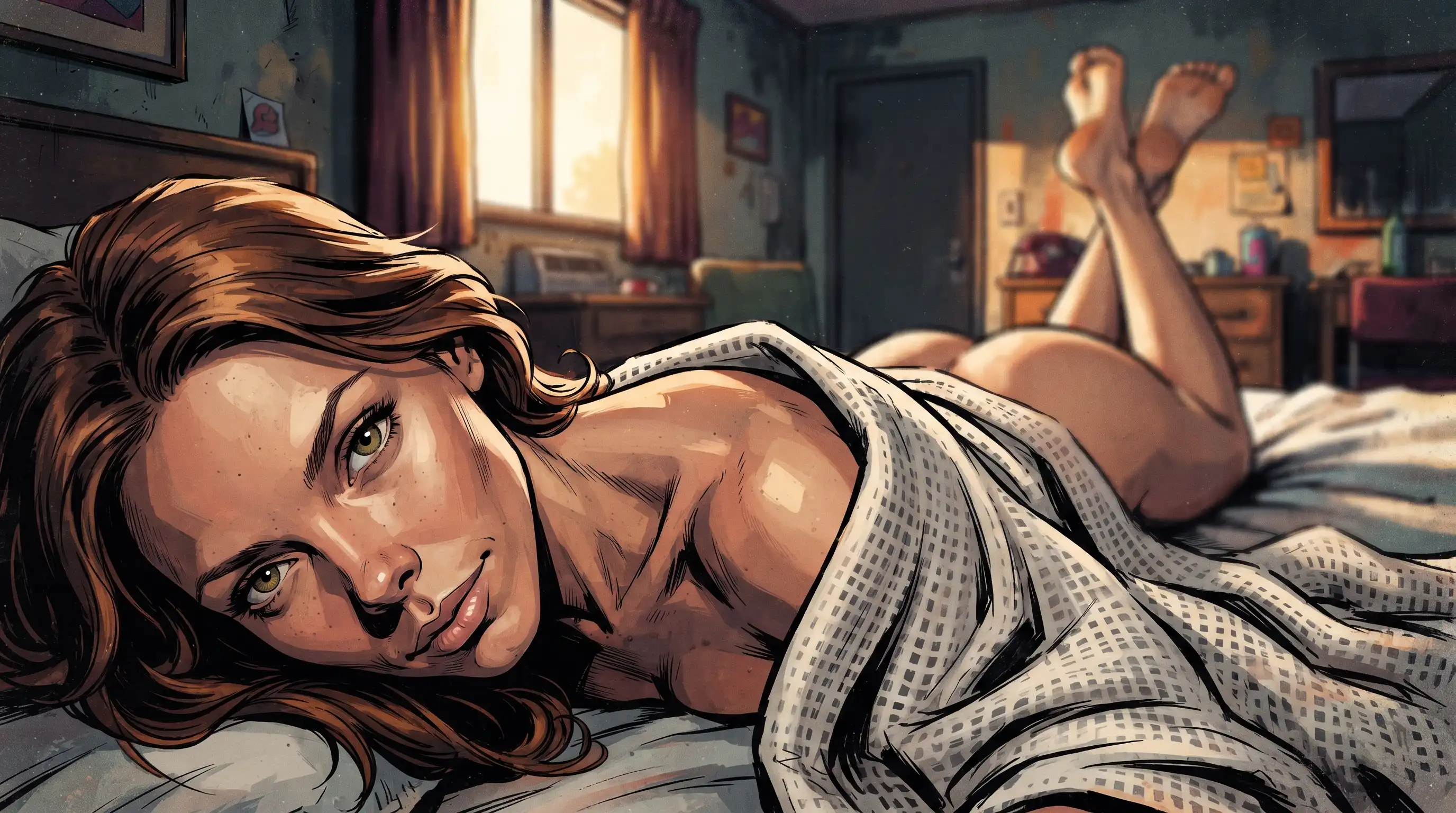
Более зрелая рисованная эстетика с выразительной анатомией, детальной прорисовкой и визуальным языком взрослой 2D-анимации.
PROMPT
{"style_block":{"instruction":"Regardless of what is described in the main prompt, transform the entire final image into a strongly stylized mature science-fiction and fantasy animation illustration inspired by the visual language of Heavy Metal 2000. The Heavy Metal visual identity must dominate the final image and must be immediately obvious. Do not produce a generic cartoon, generic comic illustration, soft animation style, or ordinary cel-shaded character. Preserve the exact original person, identity, recognizable facial features, anatomy, body proportions, pose, gesture, clothing, hairstyle, accessories, expression, composition, perspective, camera angle, framing, scene structure, and lighting direction, but radically reinterpret the rendering style into aggressive early-2000s adult animated sci-fi/fantasy artwork with dense ink contours, heavy black shapes, dramatic painted shading, airbrushed gradients, hard-edged highlights, metallic rendering, graphic anatomy, dark cinematic contrast, and premium hand-painted comic-book detail. The visual transformation must be unmistakable.","style_priority":"The requested Heavy Metal 2000-inspired visual language has priority over generic cartoon aesthetics. Strongly favor mature adult animation, dark comic-book rendering, exaggerated graphic contrast, dense painted shadows, sharp ink contours, dramatic color separation, metallic specular highlights, and hand-painted science-fiction/fantasy illustration. Do not neutralize the style into a generic Western cartoon.","visual_identity":"The image should immediately evoke mature late-1990s / early-2000s science-fiction and fantasy animation with the visual aggression of Heavy Metal 2000: hard black contours, sculpted anatomical forms, highly graphic silhouettes, dramatic painted gradients, dark shadows, polished metal, intense rim lighting, saturated accent colors, industrial textures, cinematic atmosphere, and illustrated comic-book energy.","medium":"Traditional hand-inked and hand-painted 2D animation combined with detailed comic-book illustration, airbrush rendering, cel-painted shadows, opaque gouache-like color blocks, layered brushwork, and polished science-fiction concept-art techniques.","linework":"Use noticeably heavier and more aggressive ink linework than a normal cartoon filter. Strong black contours, selective double contours, graphic internal lines, sharp silhouette accents, angular detail strokes, dark edge reinforcement, expressive brush-ink variation, and intentionally visible hand-drawn construction marks. Lines should feel bold, graphic, mature, and slightly gritty rather than delicate or cute.","contour_weight":"Important silhouettes should have strong dark contour emphasis. Facial planes, jawline, shoulders, arms, legs, clothing edges, architectural structures, and major objects should use deliberate graphic outlines with strong variation in thickness. Secondary details can use thinner technical lines, but the overall contour language must remain visually assertive.","black_shapes":"Introduce substantial deep black and near-black graphic masses in hair, clothing, cast shadows, creases, environmental structures, foliage, and recesses. Blacks must remain dense but retain enough internal painted detail to avoid featureless clipping. The image should have significantly more black graphic structure than a standard cartoon illustration.","shading":"Use aggressive high-contrast painted shading with large deliberate shadow masses, sharp transitions, hard-edged cel shadows, secondary soft airbrush gradients, reflected light, strong occlusion, and deep form-defining blacks. Avoid soft evenly distributed cartoon shading. Shadow shapes should visibly sculpt the anatomy and environment.","lighting":"Use dramatic cinematic lighting with strong directional illumination, pronounced rim light, hard specular accents, intense reflected color, deep shadow pockets, and high contrast between illuminated and unlit surfaces. Light should feel theatrical and graphic rather than soft and naturalistic.","airbrush":"Use controlled airbrush-style rendering inside the hard graphic structure: smooth gradients across skin and large surfaces, atmospheric transitions, warm reflected light, subtle bloom around strong highlights, and painted tonal modeling. The combination of hard ink and smooth airbrush modeling should be a defining characteristic.","color":"Use a distinctly darker and more aggressive Heavy Metal-inspired palette: deep charcoal, black, dark steel blue, petroleum blue, emerald teal, toxic green accents, burgundy, blood red, burnt orange, bronze, rust, ochre, muted gold, deep purple, and selective electric highlights. Avoid pastel palettes, soft candy colors, cute warm cartoons, or uniformly bright colors.","color_contrast":"Push strong complementary and warm-versus-cool color separation. Use hot orange, red, bronze, or gold against deep blue, teal, green, violet, or near-black shadows when compatible with the scene. Saturated colors should appear in focused graphic accents rather than evenly across the entire image.","skin":"Render skin using mature comic-book painting: strong anatomical planes, warm flesh tones, directional gradients, sharp reflected light, subtle airbrushed transitions, controlled highlights, deep occlusion shadows, and visible tonal structure. Preserve natural skin characteristics but avoid soft beauty-filter aesthetics.","face_detail":"Preserve extremely high facial specificity while applying the aggressive stylized rendering. The face must remain unmistakably the same person. Retain exact eye shape, eyelid structure, eyebrow geometry, nose width and profile, nostrils, lips, mouth shape, cheekbones, jawline, chin, forehead, ears, natural asymmetry, hairline, facial proportions, and distinctive micro-features. Render these details using mature illustrated anatomy rather than generic cartoon simplification.","identity_preservation":"Maximum identity lock. The person's face must remain recognizable as the exact same individual even after the strongest stylization. Do not replace the face with a generic comic-book character. Do not beautify, idealize, de-age, age, feminize, masculinize, redesign, or normalize facial asymmetry. Preserve the original person's structural identity above all stylistic exaggeration.","recognizability":"The final image must still be immediately recognizable as the same person and same original scene, but the rendering should unmistakably belong to a dark mature Heavy Metal-era animated sci-fi/fantasy aesthetic. Recognition must survive strong graphic stylization.","eyes":"Keep the exact original eye size, spacing, shape, gaze direction, eyelids, brows, and facial proportions. Do not enlarge the eyes. Render them with sharp illustrated detail, small highlights, layered shadow, reflective structure, and strong graphic framing characteristic of mature comic art.","hair":"Preserve the exact hairstyle, silhouette, length, ponytail or loose structure, parting, direction, and volume. Render hair using bold dark graphic masses, directional painted strands, sharp highlights, metallic-like reflected edges, and expressive ink strokes. Hair should have much stronger graphic presence than in a generic cartoon.","anatomy":"Preserve the exact real anatomy and body proportions of the original person while using the mature graphic anatomy language of Heavy Metal-style animation. Define shoulders, clavicles, torso, waist, hips, arms, hands, fingers, knees, legs, and joints with confident structural lines and strong painted planes. Do not convert the person into a superhero body or alter their real proportions.","body_detail":"Maintain highly detailed anatomical structure beneath the stylization. Visible tendons, joints, muscle planes, natural curves, skin folds, clavicles, knees, elbows, fingers, and anatomical transitions should remain readable. Stylization should enhance graphic definition rather than erase anatomy.","hands":"Preserve the exact number, placement, orientation, and structure of fingers and hands. Render hands with strong anatomical construction lines, visible joints, fingernails, knuckles, subtle shadow planes, and careful silhouette control. Avoid simplified cartoon hands.","clothing":"Keep the exact original clothing design and silhouette but render it with mature graphic-book styling: sharper folds, stronger edge highlights, deep occlusion shadows, visible seams, material separation, painted texture, directional lighting, and strong silhouette definition. Do not redesign the clothing into generic futuristic armor or fantasy costume unless explicitly requested.","materials":"Give each material highly distinct heavy painted rendering: skin with layered flesh tones, hair with sharp dark highlights, fabric with directional folds and matte texture, metal with hard white specular bands, leather with deep glossy reflections, glass with sharp transparency, water with broken luminous reflections, wood with graphic grain, stone with painted roughness, and foliage with layered painted silhouettes.","metal_rendering":"Whenever metal appears, use exaggerated science-fiction illustration rendering: razor-sharp specular highlights, broad reflective bands, dark reflected environments, scratches, brushed-metal texture, edge light, cool-to-warm reflections, and dramatic tonal separation. Metallic surfaces should look hand-painted and highly graphic rather than photorealistic.","environment":"Transform the environment into a dense painted science-fiction/fantasy animation background while preserving the actual location and major objects. Increase visual complexity through atmospheric layers, dark foliage, graphic architecture, painted textures, environmental debris, reflective surfaces, strong perspective lines, and dramatic lighting. Do not replace the actual scene with a completely different setting.","background":"Backgrounds should be richly painted and more elaborate than the character layer, with visible brushwork, atmospheric perspective, architectural forms, foliage masses, distant structures, shadows, colored haze, and graphic silhouettes. Avoid generic blurred cartoon backgrounds.","depth":"Create strong cinematic depth using overlapping silhouettes, atmospheric perspective, edge sharpness hierarchy, color contrast falloff, environmental haze, reflected light, and layered value structure. Foreground elements should be graphically stronger than distant objects.","texture":"Use visible but controlled traditional painting texture: dry-brush marks, subtle pigment irregularity, brush buildup, airbrush transitions, fine grain, ink texture, small edge imperfections, and layered paint variation. Avoid a sterile digital vector finish.","micro_detail":"Maximum detail: individual eyelashes, eyebrow hairs, fine hair strands, tiny skin irregularities, lip texture, fingernails, garment stitching, seams, material wear, scratches, reflected highlights, water movement, foliage structure, architectural surfaces, environmental particles, subtle atmospheric layers, and small secondary forms. The final detail density should exceed the original Heavy Metal 2000 animation substantially.","detail_density":"The image should feel like a premium remastered and re-illustrated frame from a mature animated science-fiction film, with modern high-detail concept-art rendering layered on top of the strong early-2000s Heavy Metal visual language. Preserve graphic simplicity of large forms while dramatically increasing small-scale rendering detail.","graphic_silhouette":"Prioritize strong readable silhouettes. Bodies, hair, clothing, machinery, architecture, vegetation, and props should have deliberate graphic shapes with sharp separation from the background. Avoid soft shapeless masses.","mature_tone":"The artwork should feel mature, dark, sensual in its visual language when appropriate to the source, dramatic, gritty, sophisticated, and cinematic. Avoid childish, whimsical, cute, family-animation, or soft fantasy aesthetics.","comic_energy":"Add the visual energy of a premium adult science-fiction comic: strong diagonals, graphic shadows, dramatic edge lighting, dynamic contour accents, concentrated highlights, bold shapes, layered background detail, and powerful visual hierarchy, while preserving the original photograph's actual pose and composition.","photographic_structure":"Preserve the exact original camera perspective, framing, subject scale, depth relationships, focal hierarchy, lighting direction, and composition. Do not recompose the photograph. Only transform its visual rendering language.","stylization_strength":"Apply a strong and unmistakable stylistic transformation. The result should no longer resemble an ordinary photograph with a light cartoon filter. It must clearly read as a mature Heavy Metal-era hand-drawn animated illustration with bold graphic contours, heavy painted shadows, airbrushed modeling, rich color contrast, and dark comic-book rendering.","realism_balance":"Preserve real human identity and anatomy, but do not preserve photographic rendering. The face and body must remain recognizable while the image becomes clearly illustrated, graphic, painted, and stylized.","aesthetic":"Mature hand-drawn science-fiction/fantasy animation, dark adult comic-book illustration, aggressive ink contours, heavy graphic blacks, cinematic painted shading, airbrush modeling, metallic rendering, rich warm-cool color contrast, dense environmental detail, sophisticated anatomy, gritty early-2000s animation energy, and premium high-detail finish.","negative_prompt":"generic cartoon, generic Western cartoon, soft cartoon, cute cartoon, children's animation, fairy-tale animation, anime, manga, chibi, oversized eyes, simplified face, generic comic-book face, generic superhero, photorealistic image, photographic skin, realistic camera photo, soft beauty filter, pastel colors, candy colors, low contrast, flat colors, weak outlines, thin outlines, clean vector art, minimal linework, simplistic cel shading, low detail, blurry face, loss of facial identity, face replacement, generic character, altered facial geometry, altered eye shape, altered nose, altered lips, altered jawline, beautified face, idealized face, de-aging, aging, altered body proportions, exaggerated muscles, superhero anatomy, body reshaping, altered pose, altered gesture, altered expression, changed hairstyle, changed clothing, redesigned costume, generic sci-fi character, unrelated fantasy environment, excessive neon, excessive glow, excessive bloom, excessive lens flare, glossy 3D CGI, 3D render, modern game character, plastic skin, porcelain skin, waxy skin, smooth digital painting, airbrushed beauty portrait, uniform outlines, sterile vector geometry, muddy colors, excessive saturation everywhere, crushed blacks with no detail, text, logo, watermark, signature.","final_result":"A visually unmistakable, highly detailed mature 2D animated science-fiction/fantasy illustration with aggressive ink contours, heavy black graphic masses, dramatic painted cel shadows, controlled airbrush modeling, metallic highlights, dark cinematic color contrast, detailed human anatomy, highly recognizable facial identity, richly painted environments, and substantially greater detail than the original Heavy Metal-era animation. The result must look like a premium hand-painted adult animation frame rather than a generic cartoon filter."}}