Ризограф
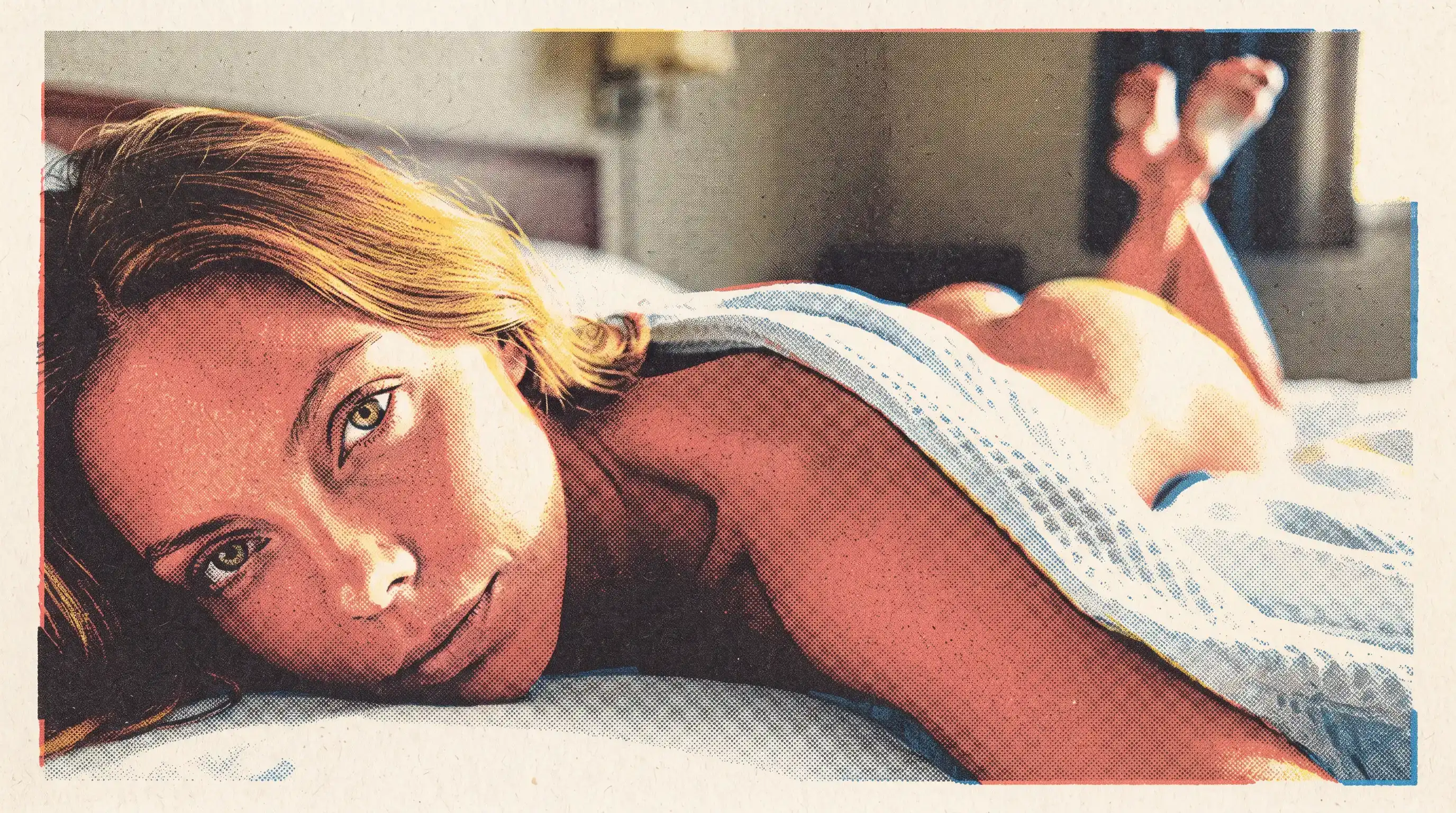
ОПИСАНИЕ
Физическая ризографическая печать с ограниченной палитрой спотовых красок, видимым растром, просвечивающей бумагой и небольшим смещением цветовых слоёв.
PROMPT
{"style_block":{"instruction":"Apply this stylization to the final image generated from the main prompt. The main prompt defines the scene, composition, pose, environment, objects, clothing, action and overall visual content. Any attached reference images are references for identity, appearance and visual consistency only; they are not the target scene and must not be directly reproduced or transformed as standalone photographs. Preserve the referenced person's identity and relevant visual characteristics while rendering the final prompted scene as a highly detailed authentic risograph print. The stylization must reproduce the physical behavior of layered risograph spot inks on paper rather than simply applying a retro color filter or generic print texture.","input_priority":"The main prompt defines what is happening and what the final scene contains. Reference images define who the subject is and how that subject should look. The style block defines how the final generated image is reproduced. When a reference image and the main prompt differ in scene, environment, pose, clothing, objects or composition, follow the main prompt while preserving the referenced identity and relevant appearance.","medium":"Traditional risograph printing on slightly absorbent uncoated paper using translucent spot-color inks, stencil-based reproduction, visible halftone structure, imperfect registration and characteristic ink absorption.","print_process":"The image should feel physically printed on a real risograph machine. Build the final image from a small number of translucent spot-color layers rather than full CMYK photographic reproduction. Each color pass should have its own raster structure, ink density and slight registration variation.","palette":"Use a restrained risograph spot-color palette of approximately two to four dominant inks chosen to preserve the major color relationships of the final scene. Favor characteristic warm and cool combinations such as coral red, fluorescent pink, orange, yellow, teal, cyan, cobalt blue, violet, emerald or rich black, while avoiding full-spectrum digital color.","spot_colors":"Colors must behave like separate physical ink layers. Preserve clear color separation while allowing overlapping translucent inks to create secondary and tertiary colors where the layers intersect. Do not simulate photographic RGB blending or smooth digital gradients.","ink_transparency":"Riso inks are semi-transparent rather than fully opaque. Paper and underlying ink layers should influence the appearance of overprinted areas. Overlapping colors should visibly interact, producing characteristic mixed hues and tonal variation.","registration":"Introduce subtle but clearly visible misregistration between color layers. Edges may shift by a small amount, producing offset contours, doubled color fringes and imperfect alignment characteristic of real risograph printing. Registration errors must remain controlled enough to preserve subject identity and readability.","halftone":"Use visible risograph halftone and stochastic-looking dot structures to construct tonal information. Raster density should vary according to color coverage and local value. Avoid perfectly uniform digital halftone grids.","dot_gain":"Reproduce characteristic ink spread and dot gain caused by absorption into uncoated paper. Small dots may expand, merge or soften slightly, especially in dense tonal regions, while preserving enough structure for facial and material detail.","ink_density":"Construct tonal depth through combinations of ink coverage, overlapping spot colors, raster density and repeated local layering. Dark regions should emerge from denser ink coverage and color interaction rather than smooth digital black gradients.","paper":"Use matte, slightly warm or neutral uncoated paper with visible but restrained fiber and absorbency characteristics. The paper remains an active part of the image and should show through lighter ink areas.","paper_showthrough":"Preserve visible paper influence in lighter colors, sparse halftones and partially covered areas. White or near-white regions should often be the physical paper itself rather than printed white ink.","texture":"Use authentic risograph texture: fine grain, subtle fiber interaction, uneven ink absorption, tiny density fluctuations, microscopic print irregularities and local raster variation. Texture should feel physical and integrated rather than like a digital noise overlay.","detail_preservation":"Preserve the maximum amount of meaningful visual information that can survive the limited spot-color printing process. Fine facial features, hair, clothing structure, anatomy, small objects and environmental details must remain recognizable even when translated into coarse raster and limited color layers.","information_density":"Maintain high visual information density throughout the final scene. Do not simplify secondary areas into generic colored shapes merely because the image is being converted into a risograph print. Use halftone density, layered colors and compact line structure to preserve visible information.","linework":"Where linework is present, render it as printed ink marks with slight raster breakup, local density variation and subtle color misregistration. Avoid perfectly clean vector outlines and avoid comic-book contour rendering.","shading":"Translate shading into halftone density, spot-color layering and overlapping translucent inks rather than smooth gradients. Form should emerge through changes in raster density, color interaction, local contrast and selective paper exposure.","highlights":"Use unprinted paper and sparse halftone coverage for the brightest areas. Preserve important highlights through intentional gaps in the ink layers rather than digital white highlights.","shadows":"Create strong shadows through dense halftone coverage, overlapping spot colors and concentrated ink. Deep shadows may approach rich near-black where compatible with the chosen palette, but should retain printed texture and internal structure.","face_and_identity":"Preserve exact facial identity, facial proportions, natural asymmetry, eye shape, eyebrows, nose, lips, cheeks, jawline, chin, ears, hairline and distinctive characteristics. Riso simplification must not replace the person with a generic illustrated face.","hair":"Preserve hairstyle, silhouette, volume and directional structure. Individual strands may merge selectively into printed halftone clusters, but the overall structure and important fine details should remain recognizable.","anatomy":"Preserve accurate human anatomy, natural proportions, pose and subtle structural features. Do not exaggerate the body merely to fit the graphic print aesthetic.","clothing":"Preserve garment design, silhouette, seams, folds, fasteners, material structure and important small details. Translate them into spot-color shapes, raster patterns and printed tonal variation without redesigning the clothing.","materials":"Represent materials through different printed behaviors: skin through fine halftone transitions, fabric through directional raster and color layering, metal through sharp light-dark separations and overprinted reflections, glass through sparse transparent layers, wood and stone through irregular printed texture, and water through broken reflective halftone patterns.","background":"Preserve the environment defined by the main prompt using the same risograph printing language. Background elements may use fewer details and lighter ink density, but should remain structurally recognizable and should not become a generic poster backdrop.","depth":"Create depth through color separation, raster density, overlap, atmospheric reduction, local contrast and selective registration offsets. Foreground elements may receive denser and sharper printing while distant areas become lighter and more transparent.","lighting":"Translate the lighting defined by the main prompt into risograph values using spot-color coverage, halftone density, paper exposure, overlapping inks and local contrast. Do not invent poster-like lighting that was absent from the scene.","composition":"Follow the composition, camera angle, framing, perspective, subject placement and spatial relationships defined by the main prompt. Reference images must not override the prompted scene composition.","print_character":"The final image should feel like a carefully produced contemporary risograph art print with visible physical printing behavior, not a digitally generated illustration with a vintage effect. Embrace slight imperfections in registration, ink density and paper interaction while preserving sophisticated composition and detail.","aesthetic":"Contemporary risograph art print, limited spot-color palette, translucent soy-ink appearance, tactile uncoated paper, visible halftone structure, subtle color misregistration, layered ink mixing, graphic but highly detailed rendering, imperfect DIY print character and sophisticated modern editorial-art aesthetic.","realism":"The scene must remain faithful to the visual content defined by the main prompt and preserve recognizable identity, anatomy and material structure. The transformation changes the reproduction medium and color behavior rather than replacing the subject with a generic graphic poster.","imperfections":"Allow restrained authentic risograph imperfections: slight color-layer misregistration, small ink-density fluctuations, uneven absorption, occasional tiny raster defects, subtle paper fibers, localized dot gain, minor color overlap irregularities and faint mechanical inconsistencies. Imperfections should feel physical and deliberate rather than damaged or chaotic.","layout_integrity":"Apply the risograph treatment to the visual artwork itself. Do not automatically add poster borders, editorial layouts, decorative typography, headlines, page frames or graphic design elements unless explicitly requested by the main prompt.","text_restriction":"Do not generate letters, words, numbers, captions, headlines, logos, slogans, signatures or graphic symbols merely because the aesthetic resembles printed editorial or poster material. If the main prompt explicitly requests text, preserve that requested text as accurately as possible.","negative_prompt":"full-spectrum digital color, RGB rendering, CMYK commercial printing, glossy magazine print, smooth digital gradients, photographic rendering, clean vector art, comic-book art, screen-print texture, Xerox photocopy, xerography, pixel art, watercolor, oil painting, graphite, pencil, charcoal, ink drawing, excessive neon, unlimited color palette, fully opaque paint, perfectly aligned color layers, perfect registration, clean vector edges, sterile digital gradients, generic retro poster, generic vintage filter, fake paper overlay, excessive grain, random noise, grunge overload, torn-paper collage, automatic text, random letters, fake words, numbers, captions, slogans, logos, watermarks, signatures, altered identity, altered anatomy, altered pose, altered composition, redesigned scene, generic background.","final_result":"A highly detailed authentic risograph print of the final scene defined by the main prompt, built from a restrained palette of translucent spot inks on real uncoated paper, with visible halftone structure, natural paper show-through, characteristic dot gain, layered color mixing, subtle registration errors, tactile ink absorption and restrained mechanical imperfections. The result must feel like a genuine physical risograph artwork rather than a digital illustration with a retro print filter, while preserving the referenced identity and the complete scene defined by the main prompt."}}