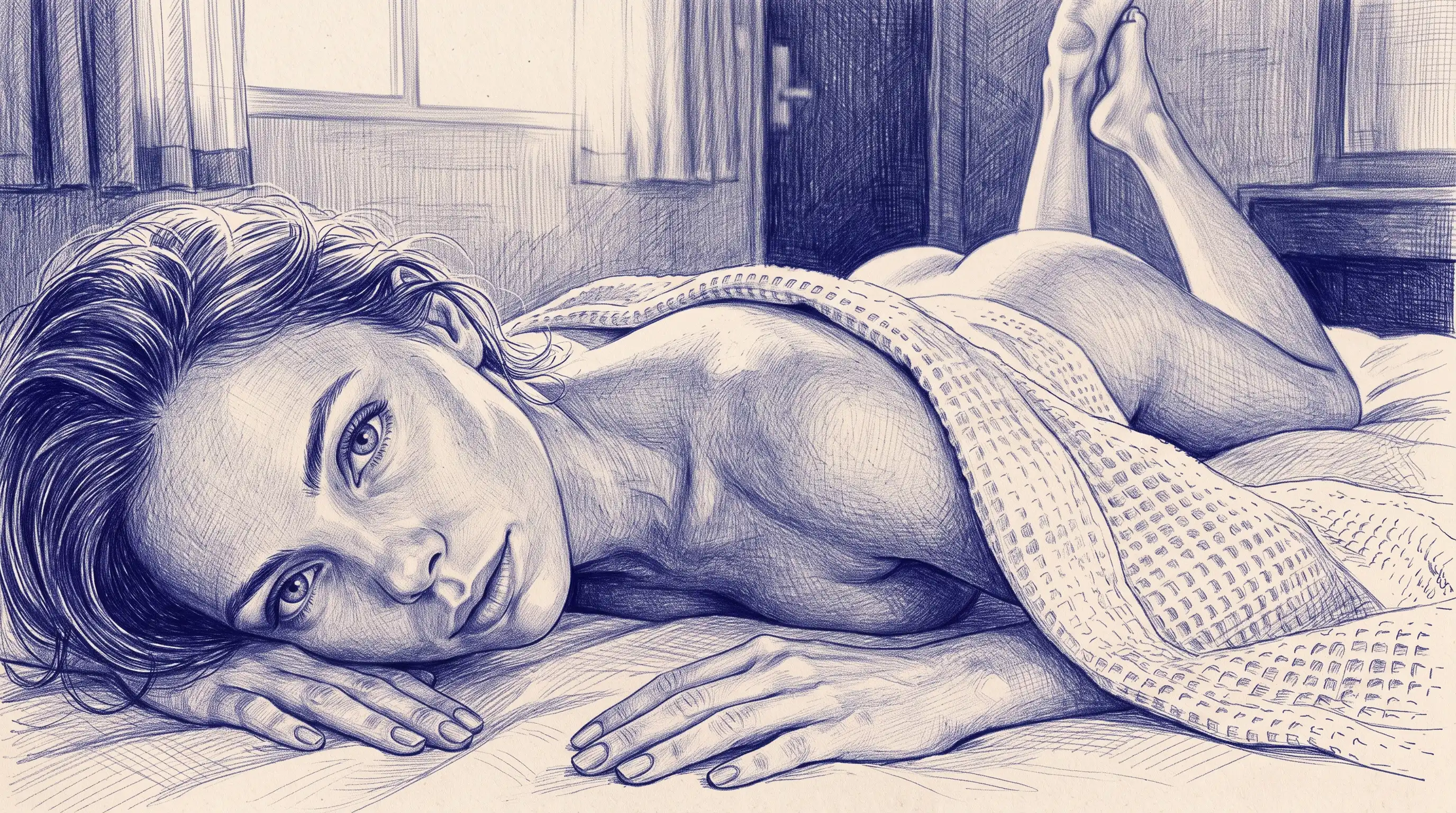
Рисунок синей шариковой ручкой
ОПИСАНИЕ
Реалистичный рисунок синей шариковой ручкой с плотной штриховкой, накоплением чернил, вариацией нажима и живой фактурой ручной работы.
PROMPT
{"style_block":{"instruction":"Apply this stylization to the final image generated from the main prompt. The main prompt defines the scene, composition, pose, environment, objects, clothing, action and overall visual content. Any attached reference images are references for identity, appearance and visual consistency only; they are not the target scene and must not be directly reproduced or transformed as standalone photographs. Preserve the referenced person's identity and relevant visual characteristics while rendering the final prompted scene as an exceptionally detailed traditional blue ballpoint pen drawing on real paper. The stylization must change the rendering medium without reducing the amount of visual information present in the final scene.","input_priority":"The main prompt defines what is happening and what the final scene contains. Reference images define who the subject is and how that subject should look. The style block defines how the final generated image is rendered. When a reference image and the main prompt differ in scene, environment, pose, clothing, objects or composition, follow the main prompt while preserving the referenced identity and relevant appearance.","medium":"Traditional blue ballpoint pen drawing created entirely with a real blue-ink ballpoint pen on natural paper. The image must convincingly resemble an original handmade pen drawing rather than a digital filter applied to a photograph.","ink":"Monochrome blue ballpoint ink with natural variation in saturation, density, pressure and line accumulation. Use subtle shifts from pale translucent blue to rich dark blue caused entirely by ink coverage, repeated strokes and writing pressure.","drawing_technique":"Extremely precise observational drawing using layered ballpoint strokes, directional hatching, cross-hatching, contour hatching, scribbled micro-strokes, short repeated marks, circular shading motions, overlapping passes, controlled pressure variation and selective ink accumulation. Use different stroke directions to describe planes, curvature, texture and depth.","linework":"Use varied ballpoint line weight created through pressure, angle, speed and repeated passes rather than digital uniformity. Fine lines for eyelashes, hair strands, fabric fibers, wrinkles and micro-details; stronger repeated passes for major contours, deep folds and important structural boundaries. Allow occasional tiny line interruptions and natural variation in stroke thickness.","hatching":"Use extensive directional hatching and cross-hatching to build form, volume and tone. Change hatch direction according to anatomy, material and surface curvature. Layer multiple generations of fine strokes to create darker values instead of using smooth digital gradients. Dense hatching should become visually richer in shadows and sparse in highlights.","tonal_build":"Construct the entire tonal range through ink density, stroke frequency, overlapping passes and pressure variation. Light areas should remain mostly open paper with sparse delicate marks. Midtones should use controlled layered hatching. Deep shadows should contain dense overlapping blue strokes, repeated passes and concentrated ink buildup.","shadow_accumulation":"Dark areas must visibly contain accumulated ballpoint ink produced by repeated manual passes. Use tighter spacing, multiple crossing directions, stronger pressure and selective scribbling in deep shadows. Avoid simply replacing dark areas with flat solid blue fills.","micro_detail":"Preserve the maximum amount of fine visual information from the final scene. Retain individual hair strands, eyelashes, eyebrows, pores, fine skin texture, tiny wrinkles, fabric fibers, seams, fingernails, small object edges, surface imperfections, environmental textures and other high-frequency information. Render these through tiny precise pen marks rather than broad simplified shapes.","information_density":"Maintain extremely high information density throughout the image. Do not simplify secondary areas into vague blue masses merely because they are less important. Backgrounds, clothing, hair, skin, objects and environmental structures should retain their visible structural information wherever physically representable with ballpoint pen.","face":"Preserve exact facial structure, recognizable identity, natural asymmetry, eye shape, eyelids, eyebrows, nose, lips, cheeks, jawline, chin, ears, hairline and distinctive micro-features. Use delicate high-density pen marks to describe facial planes, skin texture and small anatomical transitions without turning the face into a generic illustrated portrait.","hair":"Preserve the exact hairstyle, volume, direction, silhouette and fine structure. Individual strands, flyaway hairs, curls, wisps and small highlight gaps should remain visible. Use fine flowing ballpoint lines following the direction and structure of the hair, with denser repeated strokes in darker areas.","anatomy":"Preserve accurate human anatomy, proportions, natural asymmetry and subtle structural features. Visible tendons, joints, knuckles, nails, skin folds, clavicles, muscle transitions and other anatomical landmarks should remain readable through carefully controlled linework and tonal hatching.","clothing":"Preserve garment construction, seams, folds, fasteners, fabric texture, edges and small visible details. Use stroke direction appropriate to the fabric and form, with denser overlapping hatching in compressed folds and lighter separated lines on illuminated surfaces.","materials":"Represent each material using distinct ballpoint behavior: delicate layered strokes for skin, directional fine lines for hair, broken and parallel hatching for fabric, concentrated dark passes for leather, sharp reflective gaps for metal, angular contour marks for hard surfaces, irregular texture clusters for wood and stone, and broken directional strokes for water or glass.","surface":"The paper must remain visibly present beneath the drawing. Allow subtle paper tooth, natural fibers, tiny fibers catching ink, slight variations in ink absorption and faint irregularities in the drawing surface. The paper should influence the marks without overpowering them.","ink_behavior":"Include authentic ballpoint-pen behavior: slight skips, tiny interruptions, uneven ink deposition, occasional pale strokes, small pressure changes, microscopic ink pooling in heavily worked areas, subtle line overlaps, rare accidental marks and tiny imperfect stroke starts and stops. These imperfections must remain restrained and believable.","pressure_variation":"Use natural variation in hand pressure. Light pressure produces thin translucent blue marks; moderate pressure produces clear midtone strokes; heavier pressure produces dense dark blue lines and compact ink clusters. Avoid mechanically uniform stroke weight.","stroke_character":"Preserve visible evidence of the physical drawing process: repeated passes over the same area, subtle direction changes, overlapping line families, slight hand movement irregularities, and tiny deviations in otherwise controlled contours. The result should feel drawn rather than plotted.","erasures_and_corrections":"Allow extremely subtle evidence of human correction where appropriate: tiny overwritten strokes, small abandoned marks, faint construction lines, minute accidental overlaps and restrained local corrections. Do not introduce obvious pencil eraser artifacts or large erased regions; this is a ballpoint drawing, not a pencil sketch.","highlights":"Create highlights primarily through untouched paper and deliberate gaps between blue strokes. Use sparse isolated marks, broken contours, reduced hatch density and carefully preserved white paper to produce the brightest areas. Avoid white digital highlights painted over the drawing.","depth":"Create convincing depth through line density, hatch orientation, overlapping strokes, atmospheric reduction, value grouping and selective detail. Foreground areas should contain stronger, denser and more precise marks, while distant elements may use lighter and more widely spaced blue strokes without becoming empty or blurry.","background":"Build the background from the environment defined by the main prompt using the same ballpoint medium. Preserve architectural, natural and object detail wherever visible, while allowing distance to be communicated through reduced line density and lighter ink coverage rather than digital blur.","composition":"Follow the composition, camera angle, framing, perspective, subject placement and spatial relationships defined by the main prompt. Reference images must not override the prompted scene composition.","lighting":"Translate the lighting defined by the main prompt into ballpoint values using hatch density, directional stroke changes, preserved paper highlights, concentrated shadow buildup and reflected light suggested through local line variation. Do not use smooth digital gradients.","texture":"Use authentic pen-generated texture throughout the image: fine cross-hatching, directional line families, tiny scratch-like marks, stippled micro-clusters created with ballpoint strokes, overlapping passes and subtle irregularities caused by the physical medium. Avoid digital texture overlays.","realism":"The final result must look like an exceptionally skilled human artist created the image entirely with a blue ballpoint pen on paper. It should resemble a highly refined observational pen drawing with extraordinary anatomical, material and environmental precision rather than a digital illustration processed with a blue filter.","aesthetic":"Highly detailed blue ballpoint pen artwork, monochromatic blue-ink realism, sophisticated cross-hatching, intricate linework, dense tonal layering, tactile paper texture, authentic ink accumulation, subtle handmade imperfections, exceptionally high information density and refined observational drawing.","color":"Strictly monochromatic blue ink on natural paper. Use only variations in blue intensity created by ink density, pressure, layering, stroke spacing and paper interaction. No black ink, colored pencils, watercolor or additional colors.","imperfections":"Include tiny authentic imperfections of handmade ballpoint drawing: slight pressure variation, minuscule line breaks, uneven ink deposition, subtle pen skips, microscopic overlaps, tiny accidental marks, slight stroke direction inconsistencies and natural paper-to-ink interaction. These imperfections should enhance authenticity without reducing clarity or detail.","negative_prompt":"color illustration, black ink, pencil drawing, graphite, charcoal, watercolor, oil painting, digital painting, vector art, 3D render, CGI, smooth digital gradients, airbrushing, photographic rendering, photomanipulation artifacts, digital blue filter, flat blue fills, uniform line weight, perfectly smooth vector lines, mechanical hatching, excessive scribbling, excessive random marks, broad featureless blue masses, simplified secondary areas, loss of fine texture, loss of hair strands, loss of skin texture, loss of fabric texture, loss of environmental detail, reduced information density, excessive smudging, plastic texture, generic portrait, altered identity, altered facial features, altered anatomy, changed pose, changed composition, redesigned scene, text, logo, watermark, signature.","final_result":"An exceptionally detailed, physically believable monochromatic blue ballpoint pen drawing of the final scene defined by the main prompt, preserving the referenced identity while rendering the entire image through dense hand-drawn linework, directional hatching, cross-hatching, layered ink buildup, varied pressure, visible paper texture, microscopic pen imperfections, authentic blue-ink behavior and extremely high visual information density. The result should feel like a painstakingly rendered original artwork made by hand with a real blue ballpoint pen."}}