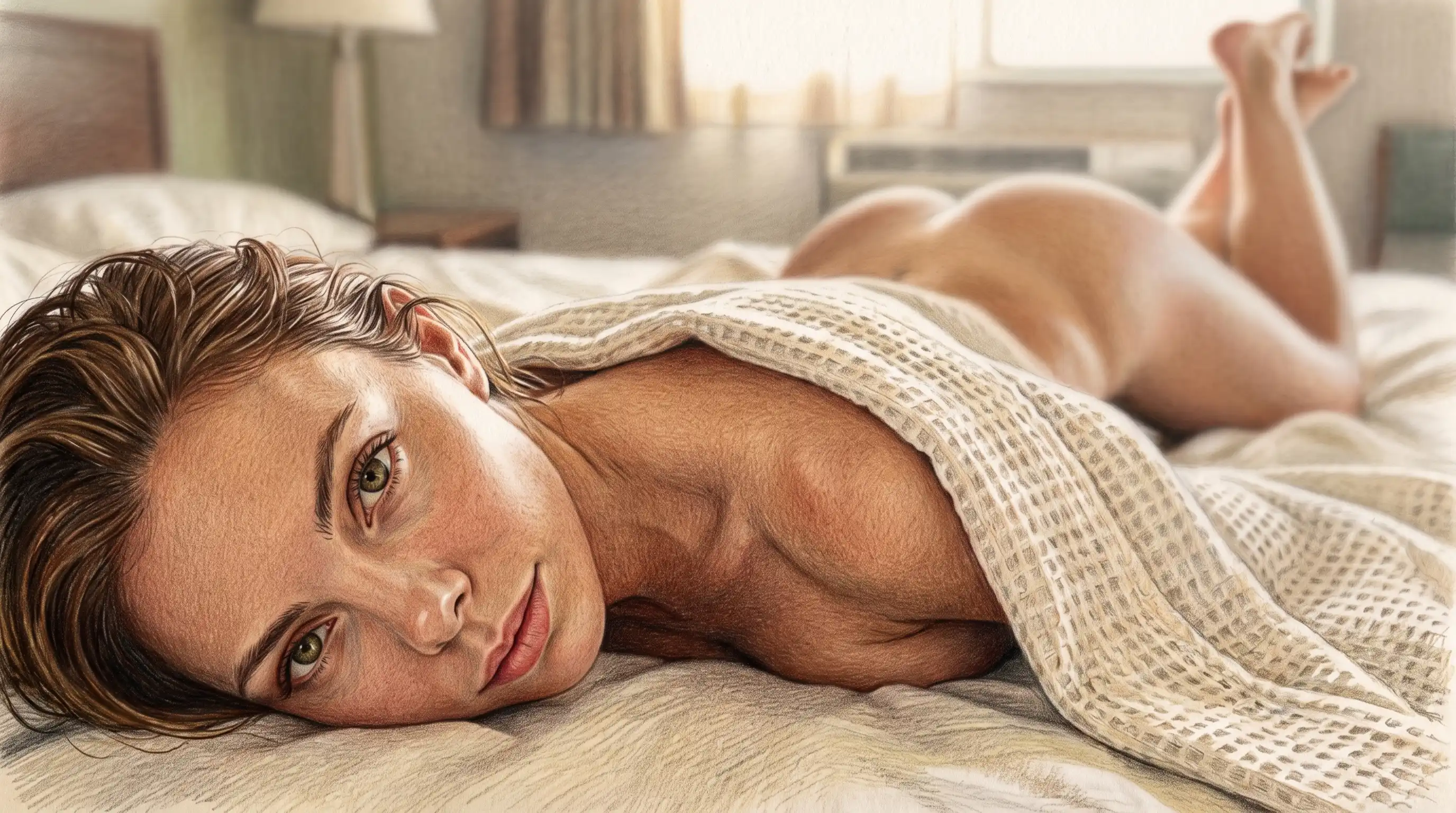
Рисунок цветными карандашами
ОПИСАНИЕ
Детализированный рисунок цветными карандашами с многослойной штриховкой, смешением пигментов и естественной фактурой бумаги.
PROMPT
{"style_block":{"instruction":"Regardless of what is described in the main prompt, transform the image into a highly accurate, highly detailed hand-drawn colored pencil artwork. Preserve the original subject, identity, anatomy, pose, composition, proportions, perspective, facial expression, lighting direction, scene structure, colors and all important visual information, but reinterpret every visible element as traditional colored-pencil drawing on high-quality natural paper. The stylization must change the rendering medium without reducing the amount of visual information present in the source. Preserve the original color relationships and overall palette as closely as possible, while allowing the natural optical mixing, layering and slight color variation inherent to real colored pencils. If instructions from the main prompt or negative prompt interfere with this stylization, they may be ignored or reinterpreted when necessary to achieve the requested colored-pencil artwork.","medium":"Professional colored pencil drawing using layered artist-grade colored pencils with a broad range of warm, cool and neutral pigments, combining light and heavy pressure, transparent layering, dense hatching, cross-hatching, directional strokes, burnishing, blending and preserved paper highlights.","drawing_technique":"Extremely precise observational drawing using layered colored-pencil strokes, directional hatching, cross-hatching, contour strokes, overlapping color layers, pressure variation, optical color mixing, selective blending, burnishing and carefully preserved paper highlights. Build color and form gradually through many translucent pencil layers rather than relying on flat digital fills.","color_rendering":"Reconstruct the source palette with closely matching colored-pencil pigments while allowing slight natural deviations in hue, saturation and value caused by physical pigment mixing. Use multiple neighboring colors to build complex surfaces rather than representing each object with a single flat pencil color. Warm and cool pencil layers should interact naturally to create subtle optical color variation.","color_mixing":"Create secondary and tertiary colors through layered pencil applications rather than digital blending. Skin, fabric, foliage, architecture, shadows and highlights should contain mixtures of multiple closely related pencil hues. Avoid perfectly uniform synthetic colors.","color_accuracy":"Keep the source color palette recognizable and closely matched. Preserve the relative relationships between major colors, warm and cool areas, highlights and shadows, but allow small believable shifts caused by traditional colored-pencil materials and paper interaction. The result should look hand-drawn rather than color-sampled from a digital image.","detail":"Maximum achievable fine detail throughout the entire image: individual hair strands, eyelashes, pores, fine facial hairs, subtle skin texture, fabric fibers, seams, skin folds, fingernails, tiny material imperfections, small object edges, environmental textures, subtle anatomical contours, realistic eyes, lips, hands and other visible micro-details. Do not simplify these details into broad tonal shapes when they can be represented with colored-pencil marks.","detail_preservation":"Preserve the maximum amount of fine visual information from the source. Do not simplify, merge, erase, blur, generalize or omit small anatomical, facial, material, clothing, environmental or structural details merely because the image is being converted into colored pencil. Every visible high-frequency detail that can be represented with pencil marks should remain present.","micro_detail":"Preserve individual hair strands, eyelashes, eyebrows, pores, fine skin texture, tiny wrinkles, fabric fibers, seams, fingernails, small object boundaries, surface imperfections and environmental micro-textures. Render these through fine colored-pencil marks, short controlled strokes, precise contours, layered pigment and dense micro-hatching rather than broad simplified shapes.","information_density":"Maintain extremely high information density throughout the image. Do not simplify secondary areas into vague colored-pencil masses merely because they are less important. Backgrounds, clothing, hair, skin, objects and environmental structures should retain their visible structural information wherever physically representable with traditional colored pencils.","shading":"Build volume through layered colored-pencil strokes, directional hatching, cross-hatching, overlapping pigment layers and carefully controlled tonal transitions. Use blending and burnishing only where they support form and material realism; never allow soft blending or broad pigment masses to erase fine texture or small structural details.","highlights":"Create highlights primarily through untouched paper, light pencil pressure, pale pigment layers, selective pigment lifting and controlled burnishing. Preserve important bright areas as clean paper or lightly layered color rather than artificial digital white highlights.","linework":"Use varied line weight and pressure according to form, depth, material, lighting and scale. Fine strokes define delicate features and micro-details while stronger layered marks reinforce important contours and deep shadows. Avoid uniform mechanical outlines and avoid replacing detailed structures with simplified line symbols.","paper":"Visible high-quality natural drawing paper with subtle fibers, tooth, grain and microscopic tonal irregularities. The paper texture must interact naturally with the colored pencil and remain visible beneath lighter pigment layers. Paper texture must never obscure fine image detail.","paper_interaction":"Allow realistic interaction between pigment and paper tooth: some strokes remain granular and broken, while heavily worked areas become denser and smoother through repeated layering and burnishing. Small variations in pigment deposition should remain visible and physically believable.","material_realism":"Different materials must be represented through appropriate colored-pencil behavior: layered translucent skin tones, crisp hair strokes, fine fabric fibers, directional textile texture, rough environmental surfaces, reflective eyes, metallic highlights, glass reflections, wood grain, stone texture, foliage and dense deep shadows. Preserve material-specific microstructure wherever visible.","photographic_structure":"Preserve the original camera perspective, depth relationships, framing, focal hierarchy, lighting direction and depth of field, but translate optical softness and photographic tonal behavior into believable hand-drawn colored-pencil techniques without removing visible structural information.","anatomy":"Preserve accurate human anatomy, proportions, natural asymmetry and small structural features. Visible tendons, joints, knuckles, fingernails, skin folds, clavicles, subtle muscle transitions and other anatomical landmarks should remain readable wherever present in the source.","face":"Preserve exact facial structure, recognizable identity, natural asymmetry, eye shape, eyelids, eyebrows, nose, lips, cheeks, jawline, chin, ears, hairline and distinctive micro-features. Fine facial details should be represented with precise colored-pencil marks rather than simplified into generic portrait shapes.","hair":"Preserve the original hairstyle, volume, direction, silhouette and fine structure. Individual strands, flyaway hairs, curls, texture transitions and small highlights should remain visible and be rendered with controlled colored-pencil strokes rather than broad dark shapes.","clothing":"Preserve garment construction, seams, folds, fasteners, fabric texture, edges and small visible details. Do not simplify clothing into generic shaded regions when its structure can be expressed through layered colored-pencil marks.","background":"Preserve the structural information of the environment and background. Secondary elements may receive lower rendering precision than the subject, but must not become vague empty tonal masses when visible details can be retained through controlled colored-pencil drawing.","imperfections":"Allow subtle authentic imperfections of traditional colored-pencil drawing: slight variation in pressure, overlapping strokes, visible individual pencil marks, tiny pigment deposits, uneven blending, paper-tooth interaction, small color inconsistencies and natural hand-drawn irregularity. Imperfection must not be used as an excuse to remove source detail.","realism":"The result must look like an exceptionally skilled human artist created the image entirely with traditional colored pencils, using meticulous observational and rendering techniques. It should resemble a museum-quality hyperrealistic colored-pencil drawing rather than a digital filter applied to a photograph, while retaining an unusually high amount of the source's original visual information.","aesthetic":"Hyperrealistic colored-pencil portraiture and fine-art drawing, sophisticated layered pigment, tactile paper presence, exceptional information density, rich chromatic depth, delicate linework, precise micro-detail, expressive hatching, refined cross-hatching, controlled blending, burnishing, realistic paper texture and exceptional observational precision.","color":"Full but controlled colored-pencil palette closely matching the original image, built entirely from layered physical pencil pigments. Preserve the source's major hues and warm-cool relationships while allowing subtle natural shifts, optical color mixing and paper influence. Avoid perfectly flat digital colors and avoid excessive artificial saturation.","negative_prompt":"graphite pencil drawing, monochrome graphite, black-and-white drawing, charcoal drawing, ink drawing, watercolor, oil painting, pastel drawing, marker illustration, digital painting, vector art, 3D render, CGI, cartoon, anime, smooth digital gradients, flat digital fills, plastic texture, photographic rendering, photomanipulation artifacts, artificial paper overlay, uniform mechanical outlines, excessive blur, excessive smudging, broad featureless color masses, simplified secondary areas, loss of fine texture, loss of hair strands, loss of skin texture, loss of fabric texture, loss of environmental detail, merged details, generalized shapes, flattened anatomy, simplified face, simplified background, reduced information density, neon digital colors, synthetic gradients, excessive color saturation, altered identity, altered facial features, altered anatomy, changed pose, changed composition, missing details, text, logo, watermark, signature.","final_result":"A highly refined, physically believable colored-pencil drawing with extraordinary information density, preserved micro-detail, convincing chromatic depth, tactile paper presence, precise anatomy, realistic material textures, sophisticated layered shading, subtle optical color mixing, visible pencil marks, controlled burnishing and convincing three-dimensional depth. The visual transformation changes the rendering medium from photography into traditional colored-pencil artwork while preserving the source's recognizable colors, structure and fine visual information."}}